
Questions?
(800) 604-5537
Cast iron and stainless floor drains for commercial kitchens, industrial spaces, restrooms, and mechanical rooms — finish-floor, area, integral-trap, and specialty models. Free shipping.
A floor drain channels unwanted water and liquid waste from interior surfaces safely into the sanitary or stormwater system, preventing pooling, structural damage, and slip hazards. Our floor drains span finish-floor, area, integral-trap, flushing-rim, and specialty models with cast iron or stainless bodies, serviceable strainers, and outlet configurations to match the load class, finish, and code requirements of the space.
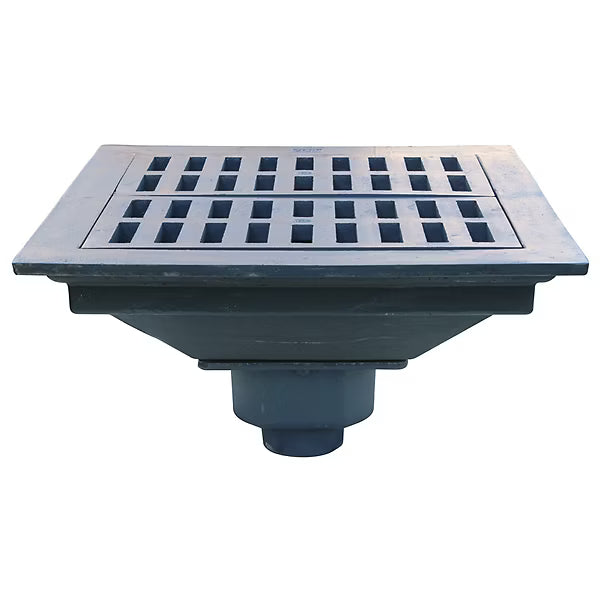
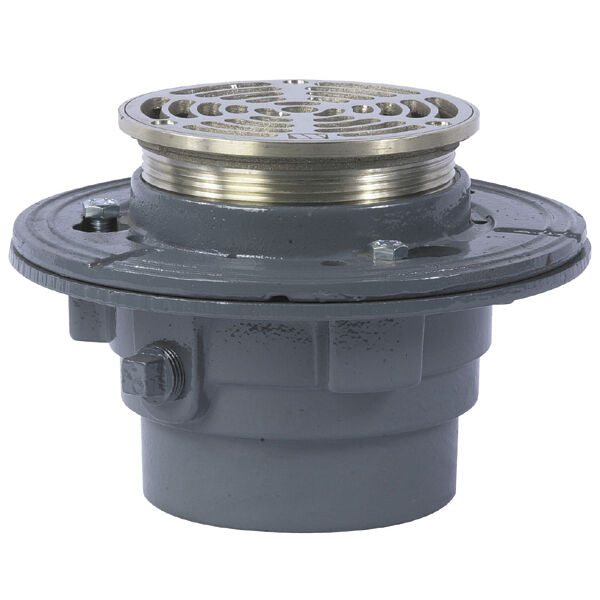
A floor drain collects water and liquid waste at the floor surface and directs it into the sanitary or stormwater piping, keeping interiors safe, hygienic, and dry. From showers and restrooms to kitchens, warehouses, concourses, and parking decks, the right floor drain improves safety, hygiene, and building durability.
A modern floor drain combines a rugged drain body, a serviceable strainer or head, and an outlet connection to the piping system. Options include integral traps for odor control, trap primer ports to keep seals charged, debris buckets for solids, and waterproofing clamps or deck plates for membrane tie-in.
Floor drains come in several forms, each tailored for specific load demands, aesthetics, and installation constraints:
Low-profile, adjustable tops for showers, locker rooms, and restrooms — set flush with tile or terrazzo.
Medium to extra heavy-duty drains for kitchens, warehouses, and production areas with higher flows and traffic.
A built-in water seal reduces odors — ideal for retrofits or tight spaces where a separate trap won't fit.
A water-fed rim rinses the bowl for animal care, food prep, and breweries where sanitation matters.
Linear capture along thresholds, plazas, and loading zones wherever sheet flow occurs across a surface.
Kettle, planter, isolation-deck, ligature-resistant, and stainless models for cleanrooms and food zones.
Match the drain to the space by working through these six factors:
For amenity spaces, choose finish-floor heads (round or square) that sit flush with the tile. For wet-process zones, specify area drains with debris buckets or trench drains to manage higher flows and solids.
| Bodies | Cast iron for durability; stainless steel for hygiene and corrosion resistance |
| Tops | Perforated, slotted, tractor, or heel-proof; round or square |
| Adjustability | Elevation and rotation to set the strainer perfectly flush |
| Options | Trap primer ports, debris buckets, anchor lugs |
| Accessories | Clamp rings, weep systems, deck plates, sediment baskets |
| Compliance | ADA / heel-proof patterns where required |
Always confirm outlet size and type, load class, top style, finish, and accessories on the project submittal and plumbing schedule.
Tie bodies to reinforcement, align the outlet to the branch piping, and set top elevation to the finish thickness so the strainer sits flush.
Use clamp rings and weep paths with tile, or deck plates on membranes. Protect grate ledges during pours to avoid concrete fouling.
Water-test, verify weep function, secure tops with the specified hardware, and document the model and options for maintenance.
A 500,000-sq-ft distribution center replaced undersized spot drains with a mix of extra heavy-duty area drains in the aisles and trench drains at the dock doors. The upgrade cut ponding calls by roughly 45% in the first rainy season and reduced cleanup time after pallet-wash cycles, thanks to larger open-area grates and debris buckets.
It's mostly about the finished floor. Round strainers suit poured finishes and tight retrofits and are the traditional look, while square tops align cleanly with tile and terrazzo grid lines for amenity spaces. Both are available heel-proof; choose the pattern and open area that meet your flow and code needs.
Use a trap primer whenever a floor drain's trap could dry out from infrequent use — common in mechanical rooms, back-of-house areas, and seasonal spaces. The primer periodically adds water to keep the trap seal charged, which stops sewer gas from entering through an evaporated trap. Specify a trap primer port on the drain body.
Choose an area drain for a point low spot that collects water from the surrounding slope — kitchens, production areas, and washdown zones. Choose a trench drain when water runs as sheet flow across a surface and you need linear capture — thresholds, plazas, and dock doors. Many large facilities use both.
They need one. A trap holds a water seal that blocks sewer gas from rising through the drain. Some floor drains have an integral (built-in) trap, while others connect to a separate P-trap in the piping below. In low-use locations, pair the trap with a trap primer so the seal doesn't evaporate.
Cast iron bodies are the workhorse choice — durable and cost-effective for general commercial and industrial use. Stainless steel is specified where hygiene and corrosion resistance matter most, such as food processing, breweries, cleanrooms, and washdown environments.
Match the grate and body rating to the traffic: pedestrian-duty for restrooms and locker rooms, light-vehicular for light commercial, and heavy or extra heavy-duty for warehouses, production floors, and areas that see forklifts or trucks. When in doubt, size up — an under-rated grate can deform under load.