
Questions?
(800) 604-5537
Primary, overflow, control-flow, siphonic, and specialty roof drains that move rainwater off flat and low-slope roofs — cast iron bodies, high-flow domes, and code-tested performance. Free shipping.
A roof drain carries rainwater off a flat or low-slope roof and into the building's storm piping, protecting the structure from ponding, leaks, and overload. Our roof drains span primary, overflow and combination, control-flow, siphonic, dual-outlet, retrofit, and specialty models for green roofs, promenades, and decks — each built with durable cast iron bodies, flashing clamps, and clog-resistant domes or strainers.
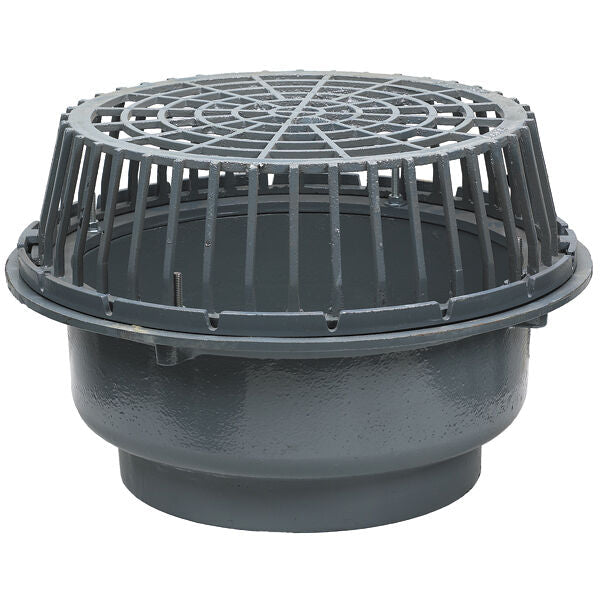
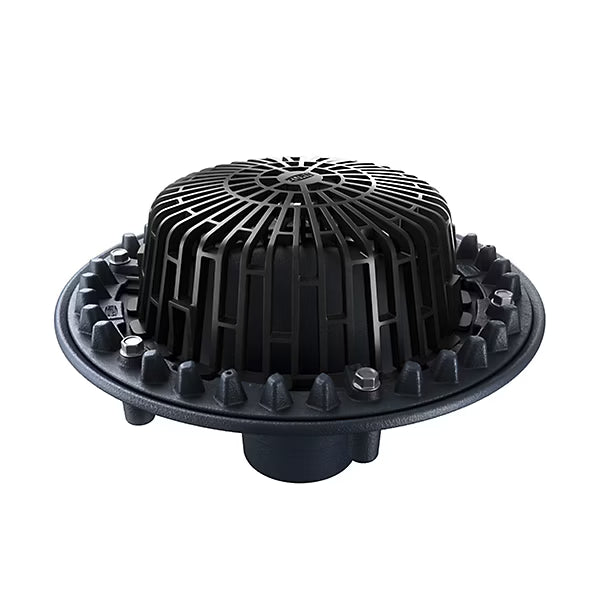
Flat and low-slope roofs don't shed water the way a pitched roof does, so they rely on roof drains to move rainwater off the surface and into the building's internal storm piping. The roof is built with a slight slope toward each drain; water collects at the low point, passes through a dome or strainer that blocks debris, and flows down a leader pipe to the storm system. Proper drainage protects the roof membrane and structure from ponding, leaks, and the enormous weight of standing water.
Sizing and placement follow the roof area, rainfall intensity, and local plumbing code. Most flat roofs use more than one drain, plus a separate overflow path in case a primary drain clogs.
Different roofs and code requirements call for different drains. The main types we carry:
The main drain at each roof low point, with a cast iron body, flashing clamp, and dome strainer for high flow and clog resistance.
A secondary drain (or combination unit) with a raised dam that only carries water if the primary drain backs up — required by most codes.
Regulate the discharge rate so runoff releases gradually, protecting downstream piping and easing load on the storm system.
Run pipes full to draw water by siphonic action — fewer downspouts, smaller pipe, and simpler layouts on large roofs.
Dual-outlet bodies and retrofit drains that drop into an existing outlet make replacements and re-roofs (including TPO) straightforward.
Green-roof, promenade, and deck drains built for planted assemblies, foot traffic, and paver or pedestal surfaces.
Most codes require two independent drainage paths on a flat roof, and understanding the pair is key to specifying correctly:
Pairing a primary with an overflow (or using a combination drain) protects against the roof load and leaks that follow a single blocked outlet.
Roof area & rainfall — the drainage area each drain serves and your local rainfall rate set the required flow capacity.
Outlet size — drains come in standard outlet diameters; match to the leader pipe and the flow you need.
Roof type — membrane, built-up, green roof, or paver deck determines the body, clamp, and dome style.
Overflow strategy — add overflow drains or combination units per code to guard against a clogged primary.
Technical data — including tested flow performance and compliance with recognized standards — supports accurate specification and installation. Accessories like risers, extension plates, and sump receivers adapt drains to varied roof assemblies.
Roof drain installation is typically handled by a roofing or plumbing contractor. The general sequence:
Set the drain body at the roof low point and connect it to the leader/storm piping below the deck.
Flash the membrane into the flashing clamp to seal the roof surface watertight around the drain.
Install the dome/strainer to keep debris out while maintaining rated flow.
Add the overflow drain or verify the combination dam height, then test flow to confirm drainage.
A flat roof is built with a slight slope toward one or more roof drains at its low points. Rainwater collects there, passes through a dome strainer that blocks debris, and flows down an internal leader pipe into the building's storm system. Larger roofs use multiple drains plus a separate overflow path.
The primary drain sits at deck level and carries normal rainfall. The overflow drain sits on a raised dam (usually 2") and stays dry until the primary clogs or is overwhelmed — then it discharges, usually to a visible spot, as a warning. Most codes require both.
In most jurisdictions, yes. Plumbing codes require secondary (overflow) drainage on flat roofs so that a single blocked primary drain can't let water pond and overload the structure. This can be a separate overflow drain or a combination primary/overflow unit.
Sizing is based on the roof area each drain serves and the local rainfall intensity, which together set the required flow rate and outlet size. The number of drains and leader pipe size follow from that and from local plumbing code. Manufacturer flow data helps confirm the selection.
A siphonic roof drain is engineered to run its pipes completely full, using siphonic action to pull water off the roof at high velocity. That lets a large roof drain with fewer drains, smaller-diameter pipe, and flatter, simpler piping runs than a conventional gravity system.
Yes. Retrofit roof drains are designed to fit into an existing drain outlet, which makes them ideal for re-roofing projects — including TPO and other membrane systems — without cutting new penetrations or re-piping.